
Behind the Creeks and Critters Name
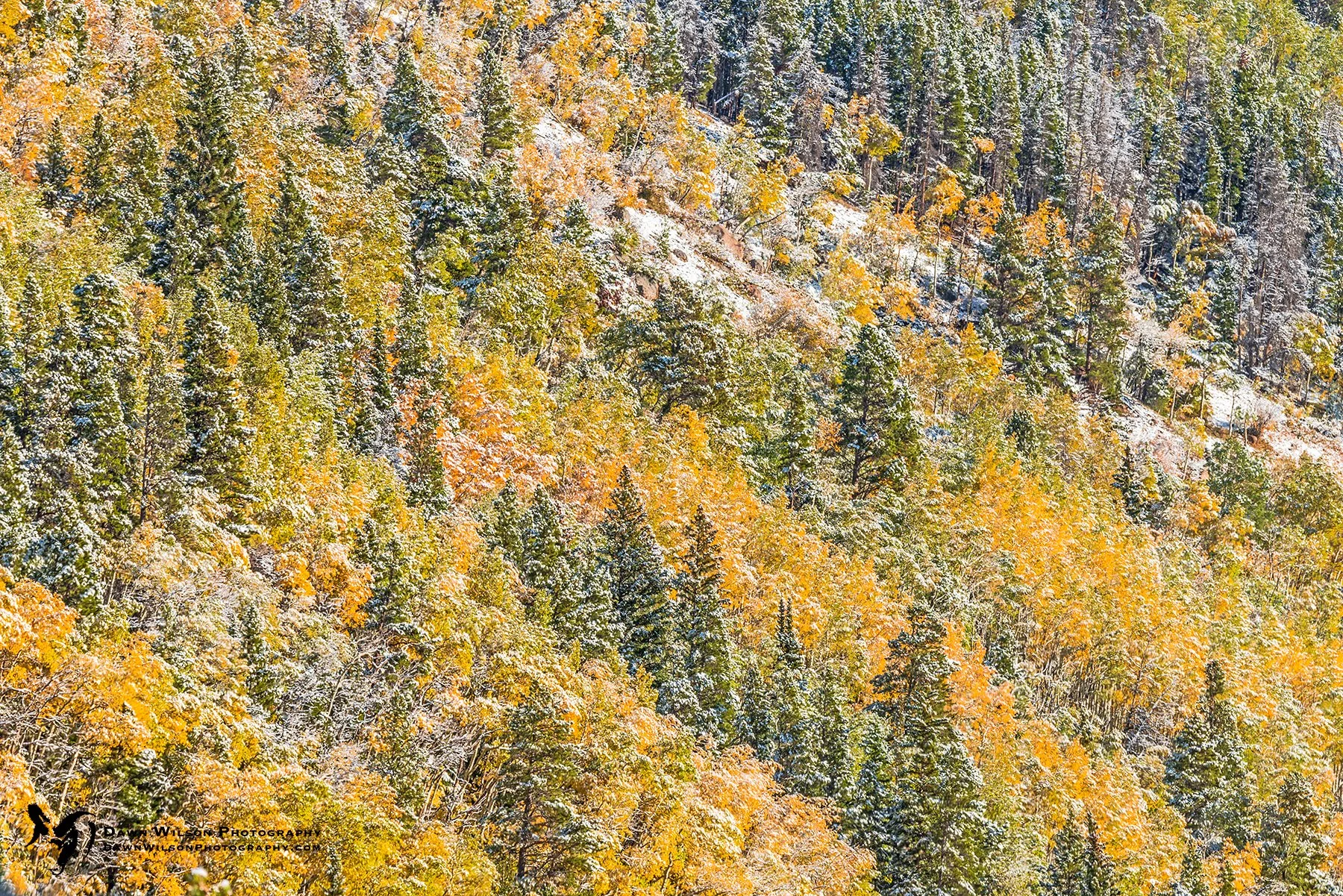
A fresh snowfall blankets the forest of aspen and pine trees in Rocky Mountain National Park.
There are multiple ways to build businesses. You can have online only, brick and mortar, a mix of the two, or maybe build it through another business, like Etsy. Businesses can focus on business-to-business customers or maybe a business-to-consumer client base.
I found that I had two very different audiences for my business. There is the business-to-business side of my photography and writing, where I work with photo editors, creative directors, managing editors, art directors and others in content creation. And then there is the tour client portion of my business, which requires a completely different message for tours and teaching.
There really is no right way to manage these different business channels but there is the best way to work with your customers. So, I decided to separate out my tour business into its own entity.
But what to call it?
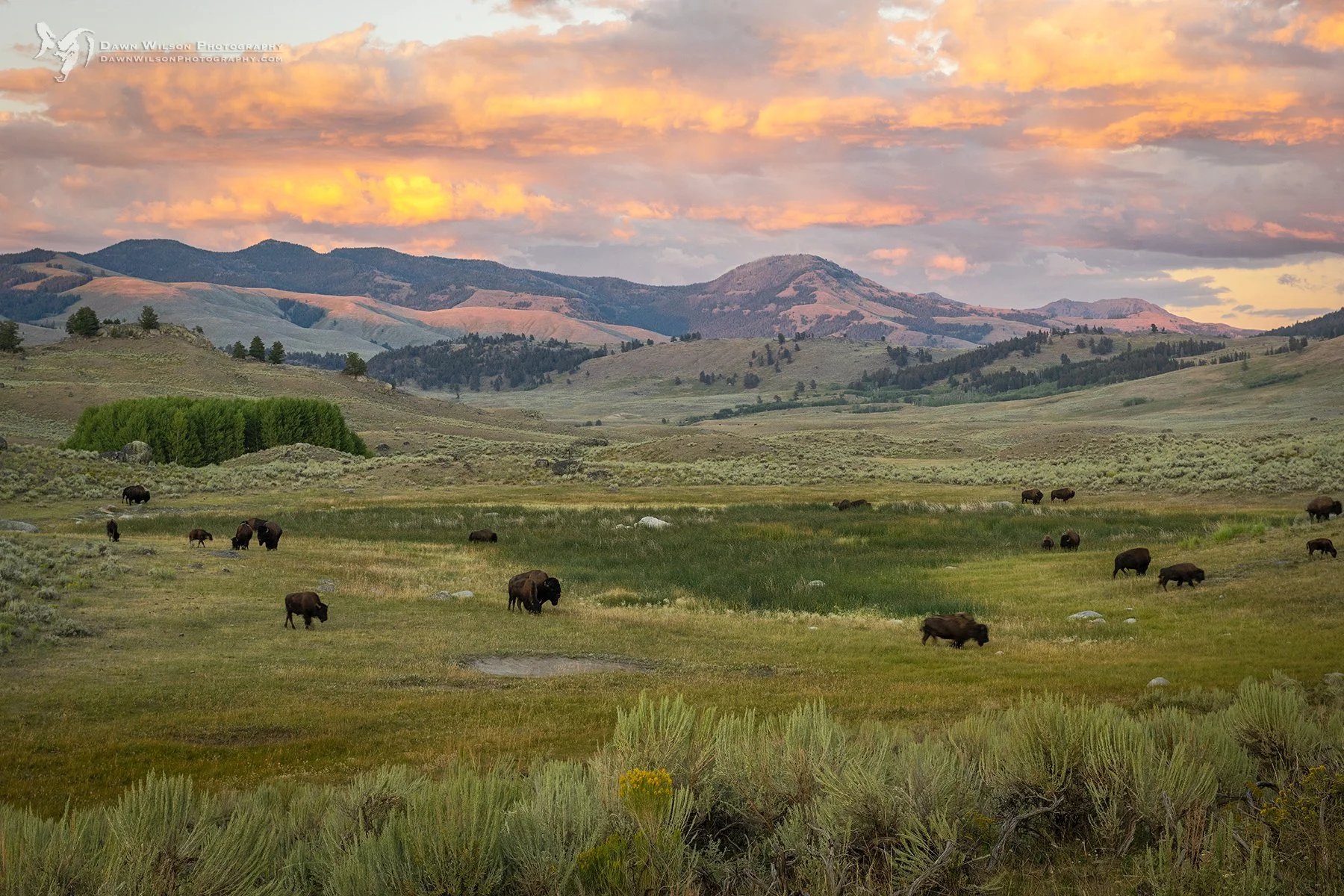
A herd of bison feed on the green grasses of the valley floor in Yellowstone National Park.
Years ago, a name popped into my head. It is actually a slight spinoff of the pet-sitting business my partner had, Critter Sitter Petsitting. The rhyming worked for that business, but I wanted something just as catchy but different. How could I combine all of the things that I strive to teach on my nature tours – animal behavior, ecology, phenology, natural history, human history, geology, botany, weather, astronomy – into one name? So much goes into a successful tour beyond teaching how to use a camera.
That name from several years ago would be the perfect representation of this tour business: Creeks and Critters.
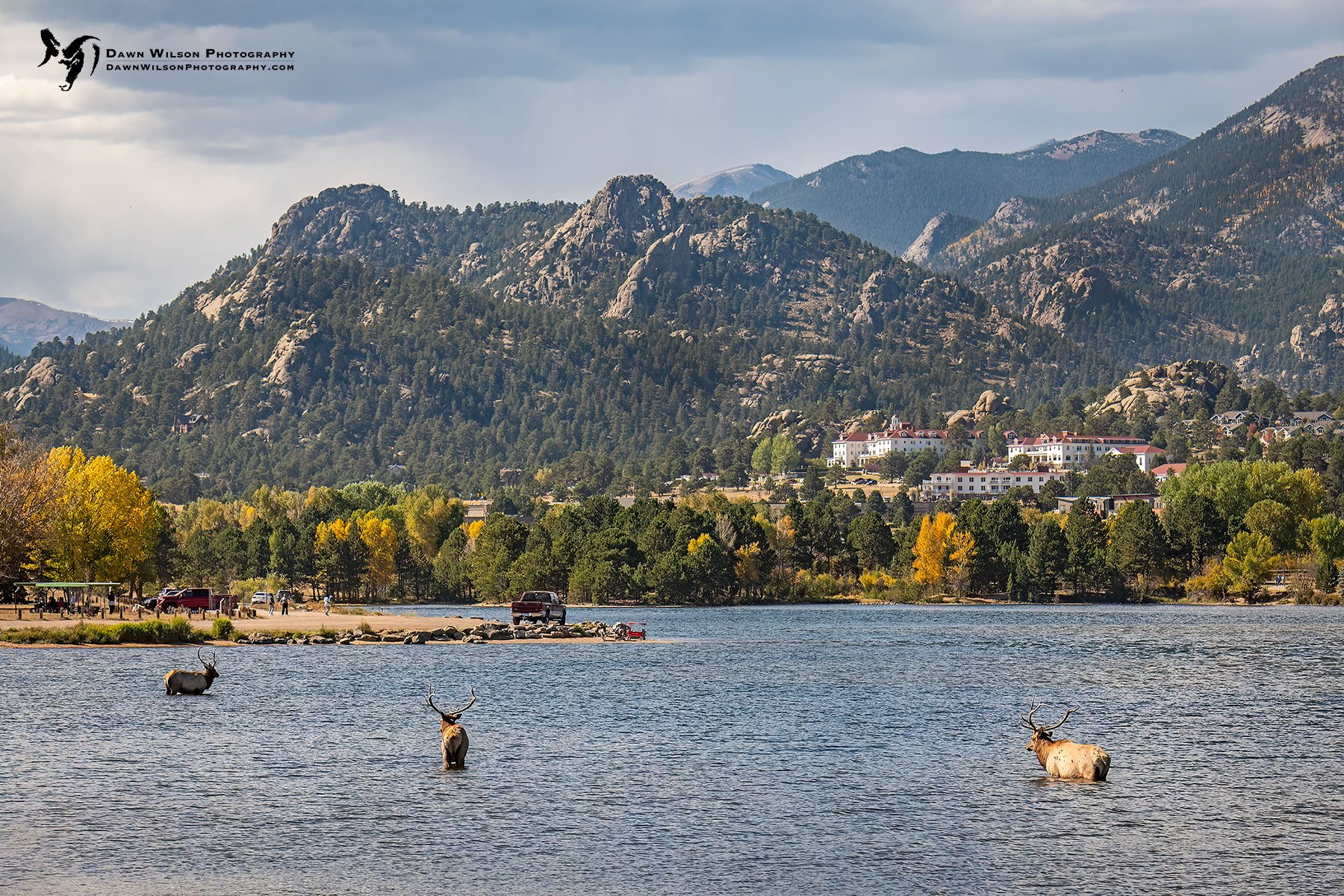
Elk mingle around Lake Estes as people fish on the shores and the iconic Stanley Hotel sits on a ridge beyond the lake in Estes Park, Colorado. It is a classic scene in this mountain town to show the fall colors, elk, people, mountains and tourism all mixed together.
Ecology is the study of relationships between living organisms — including humans — and their physical environment. And water is the fundamental essence of life on Earth. In wildlife photography, understanding animal behavior and how natural elements impact animals can help photographers capture better images. Understanding weather patterns, snow pack, clouds and geology can also help.
And those factors are the origin of Creeks and Critters. I came up with the name for my tour company based on the fact that if you want wildlife, landscape or other nature photos, you need water. Everything is connected to that simple resource for life. Snow-capped peaks need water in the form of snow. Birds use cover, such as willows or trees, to raise young. These require water to survive. Photographing scenes with lakes during a pretty sunrise need water in the lake and clouds in the sky – more water.
And although creeks are only one type of form of water, it is the representation of water as a whole.
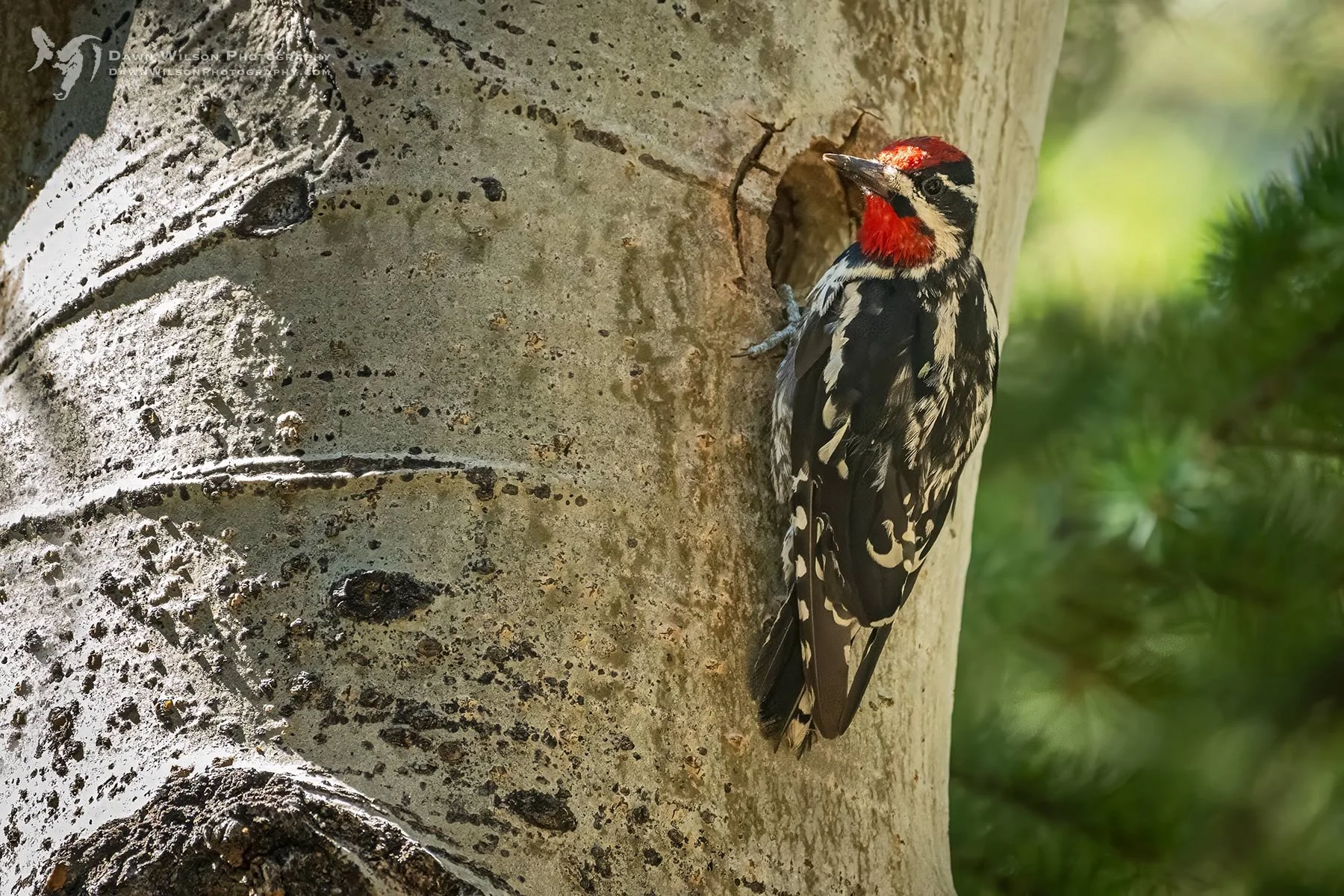
A red-naped sapsucker clings to the side of a cavity nest on an aspen tree in Rocky Mountain National Park.
For example, Colorado continues to experience a severe drought this year. That has caused a decline in food sources for animals, like birds, elk and bears. Elk have moved out of the meadows, where natural grasses are dry and thin, to areas where they feed on lush, cultivated grass due to irrigation, like on a golf course. Bears have abandoned their more traditional fall locations to forage on berries, instead opting to come into town where they can search for food in dumpsters. Birds, like hummingbirds, migrated out a little sooner than usual because of the lack of natural flowers. All of these examples are a result of the water decline.
So, as I add more tours to the schedule, I keep these things in mind. What is the water level in the Amazon River tributaries for a boat trip in the Amazon jungle of Peru? When is there the best opportunity to photograph snow-capped peaks with fall colors? What is the timing of snow before moose drop their antlers in Grand Teton National Park? How will the winter season shape up for Yellowstone National Park so we can photograph wolves on a snowy landscape and bison covered in frost? When will the ice form on Hudson Bay so we don’t miss the polar bears?
All of these elements go into planning these amazing trips so the participants can have not only a fun time, but come home with stunning photographs.
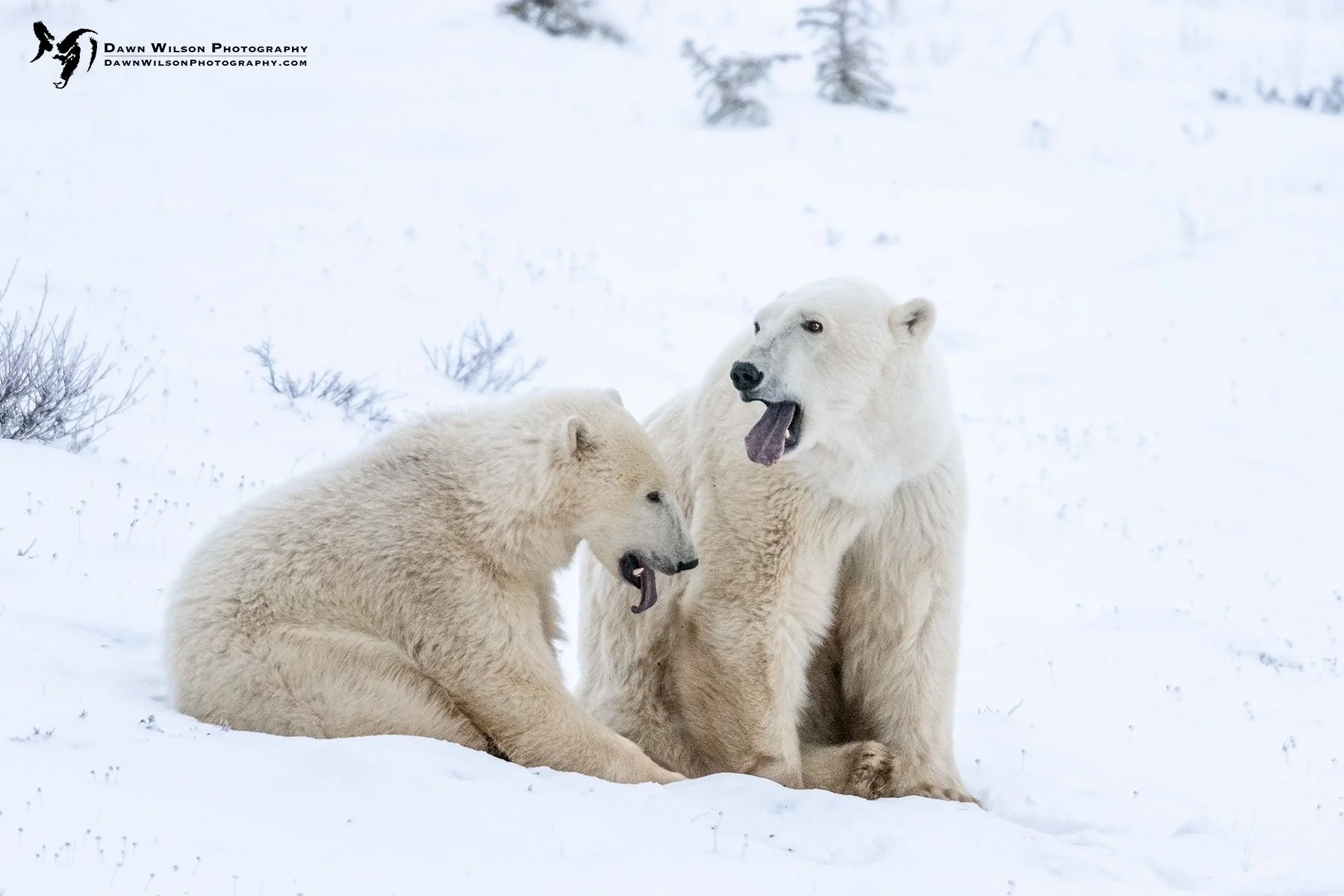
A mother polar bear and her second-season cub yawn in unison as they rest on the snowy landscape near Churchill, Manitoba, Canada.