
Focal Lengths for Landscape Photos
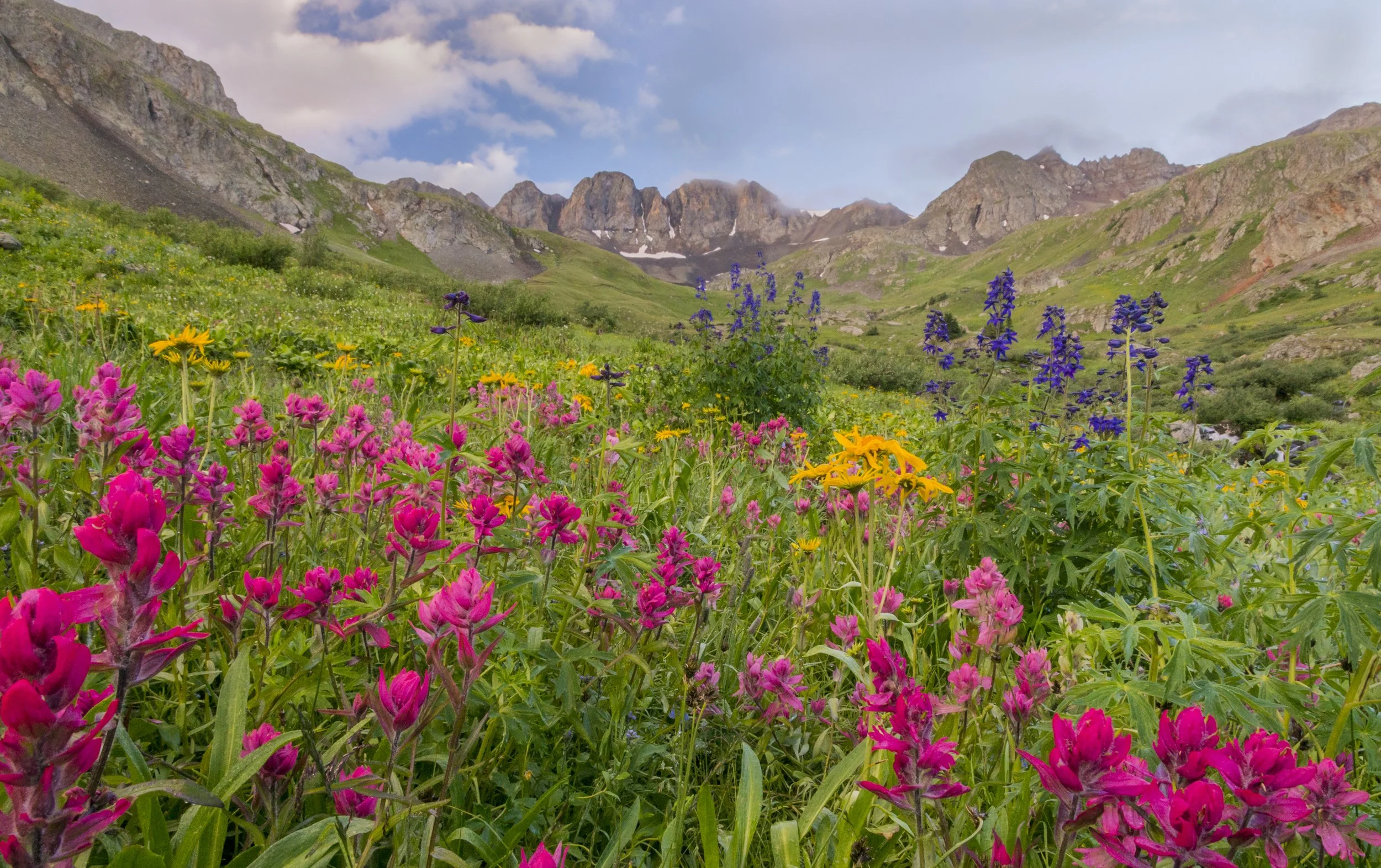
A bowl of wildflowers in Colorado's high country. Photographed at 16mm with a 16-85mm lens.
With nearly 57,000 photos snapped every second in the world, it can be overwhelming to find ways to make unique images.
People use their cell phones to capture about 90% of these photos but that still leaves an abundance of images taken with digital cameras.
One way to differentiate landscape images is to use a different lens or try different focal lengths.
First, let's define what that means. Focal length is the distance, measured in millimeters, between the center of a camera sensor and the optical center within a lens. It is not the actual measurement of the lens.
More technically, according to Nikon, it is "a calculation of an optical distance from the point where light rays converge to form a sharp image of an object to the digital sensor or 35mm film at the focal plane in the camera. The focal length of a lens is determined when the lens is focused at infinity."
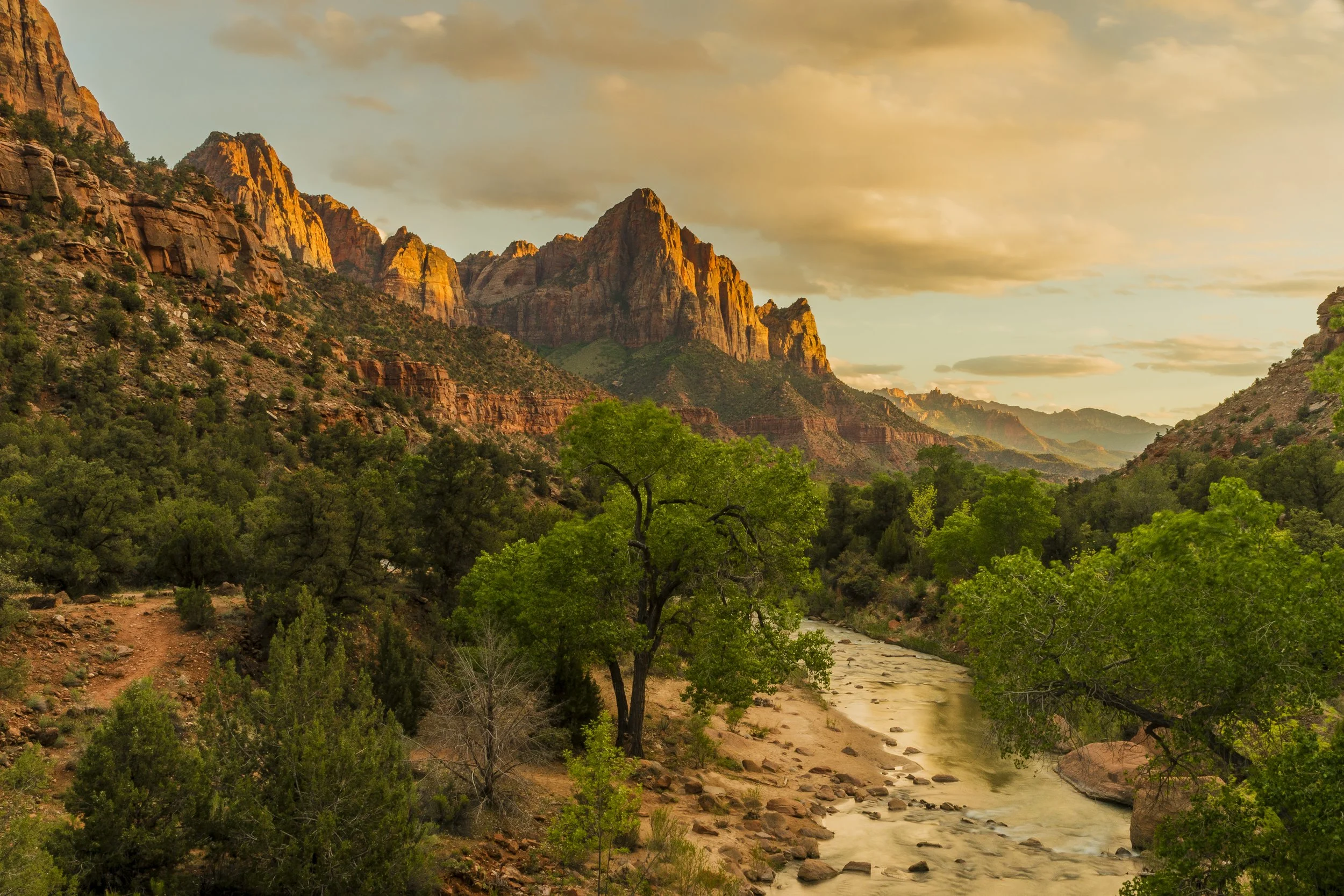
Sunset along the Virgin River in Zion National Park, Utah. Photographed with Nikon 16-85mm lens at 24mm.
That description gets pretty techy so photographers just need to know that focal length represents the field of view or how much of a scene will be captured and how much of the frame elements within the scene will appear.
The wider a lens, say at 14mm or 15mm, the smaller distant objects will appear but the more of the scene will be included in the frame. These lenses can also create a forced perspective by getting in close to a foreground subject.
A telephoto lens at say 500mm will have a very minimal amount of the scene in the frame but because of the reach of the lens to pull subjects closer, they will appear bigger. A longer telephoto lens makes mountains appear massive or creates the illusion of a full moon filling a larger portion of a sky.
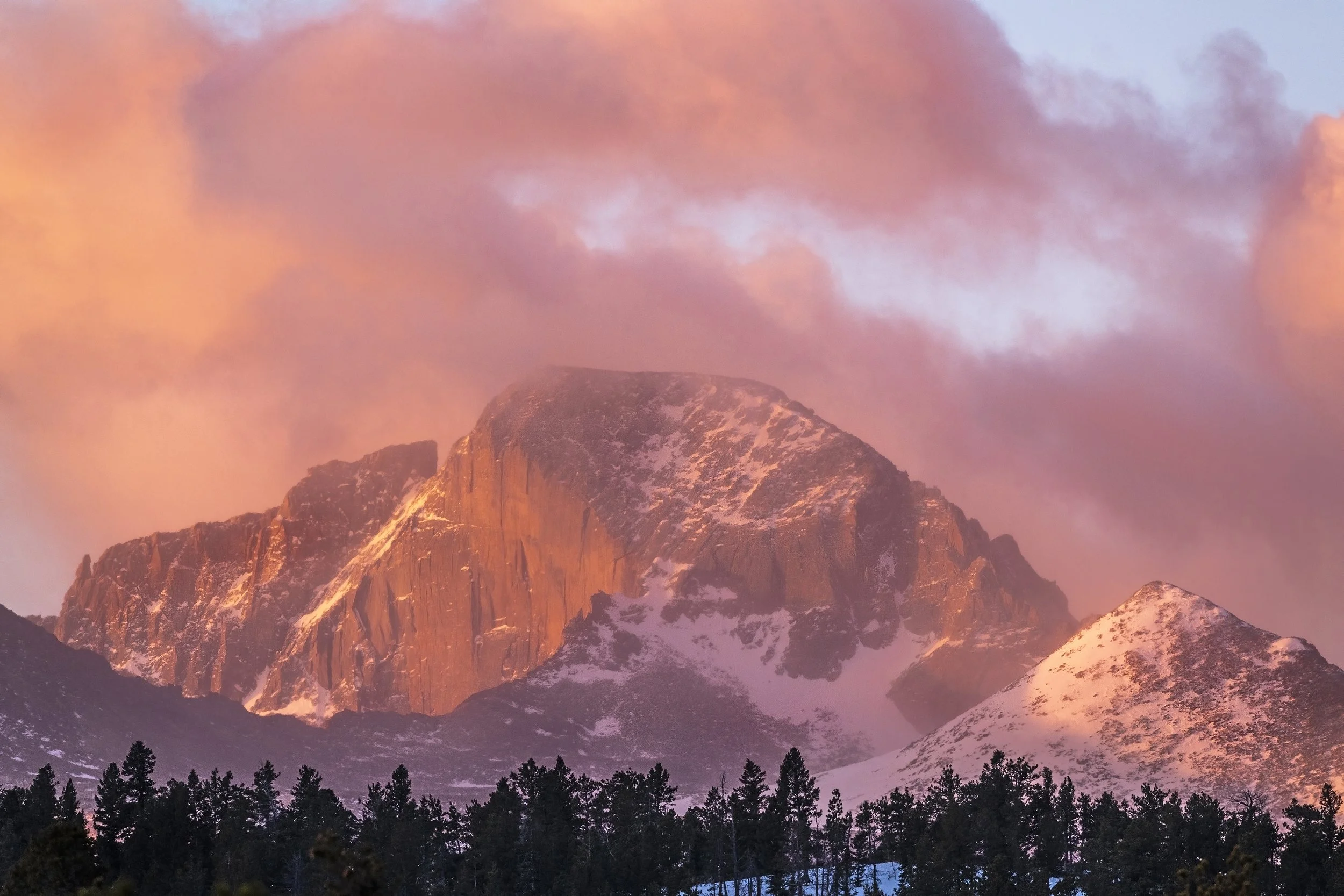
Longs Peak at sunrise in Rocky Mountain National Park, Colorado. Photographed with a Nikon 500mm lens.
Traditionally, a wide-angle lens in the range of 15 to 35mm is ideal for landscape scenes. These wider lenses will include an abundance of the scene.
After taking that image, however, reach for other lenses in your bag. The compression of a telephoto lens or the variety of lengths with a mid-range zoom can produce interesting details and perspectives. This elk image, for example, not only uses a long lens to stay safe near wildlife but also compresses the distant ridge lines to bring them in closer. This technique to give a feeling of being in the scene with the elk.
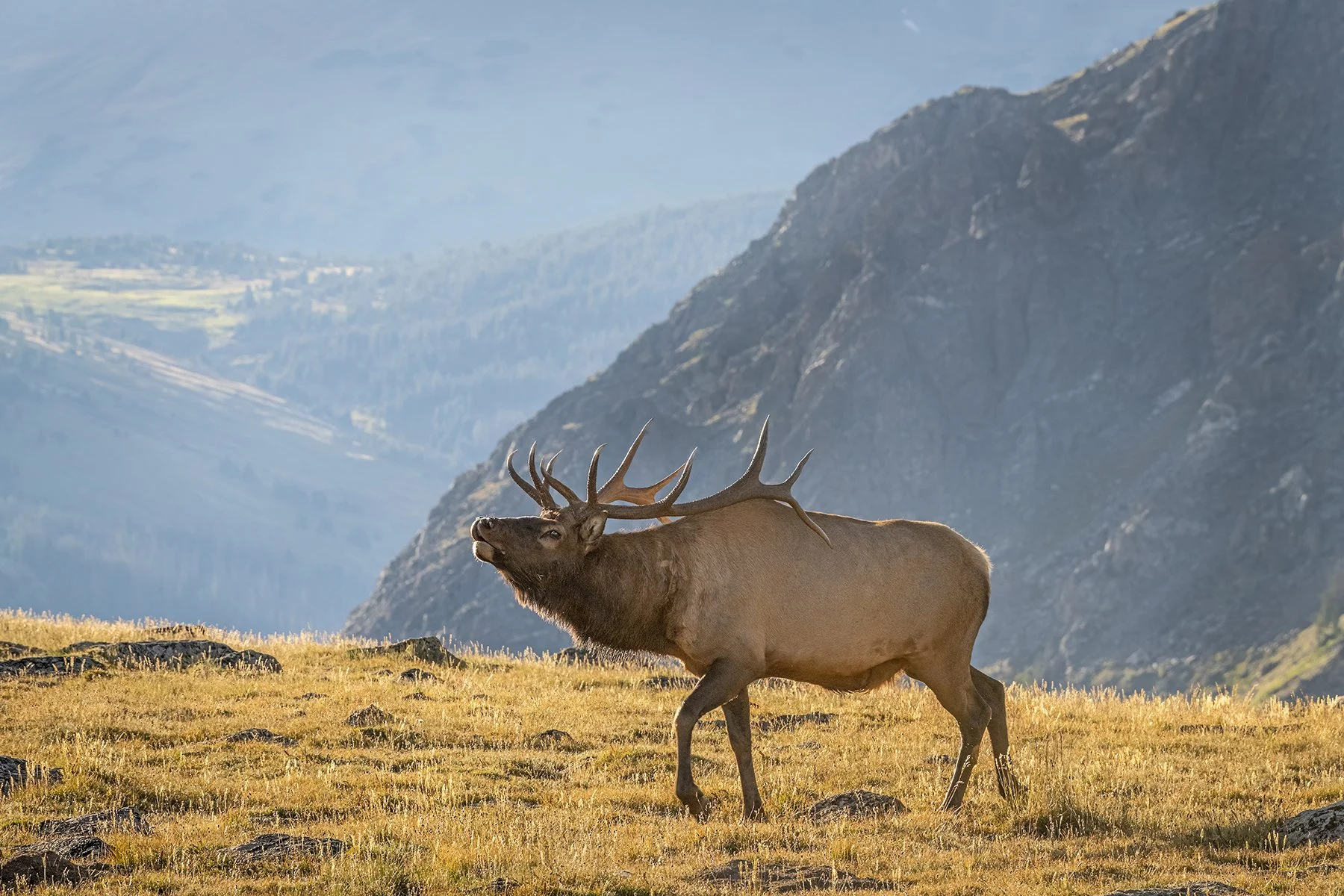
Bull elk in Rocky Mountain National Park, Colorado. Photographed with an 80-400mm lens at 370mm.
For example, these three images present the same scene on the same morning within just a couple minutes of each other yet each one gives a different look based on the focal length.
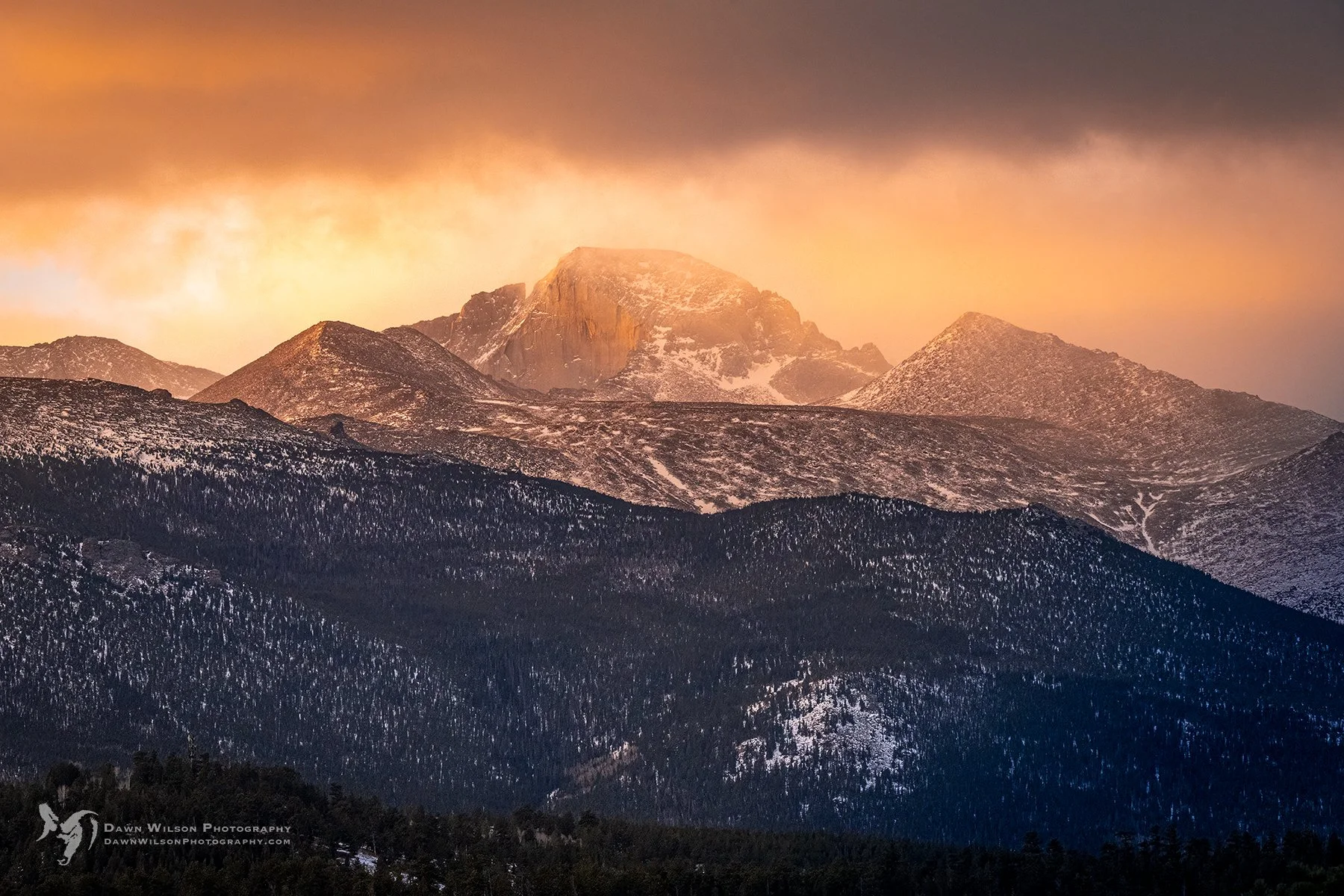
Longs Peak at sunrise in Rocky Mountain National Park, Colorado. Photographed with a Nikon 70-200mm lens at 160mm.
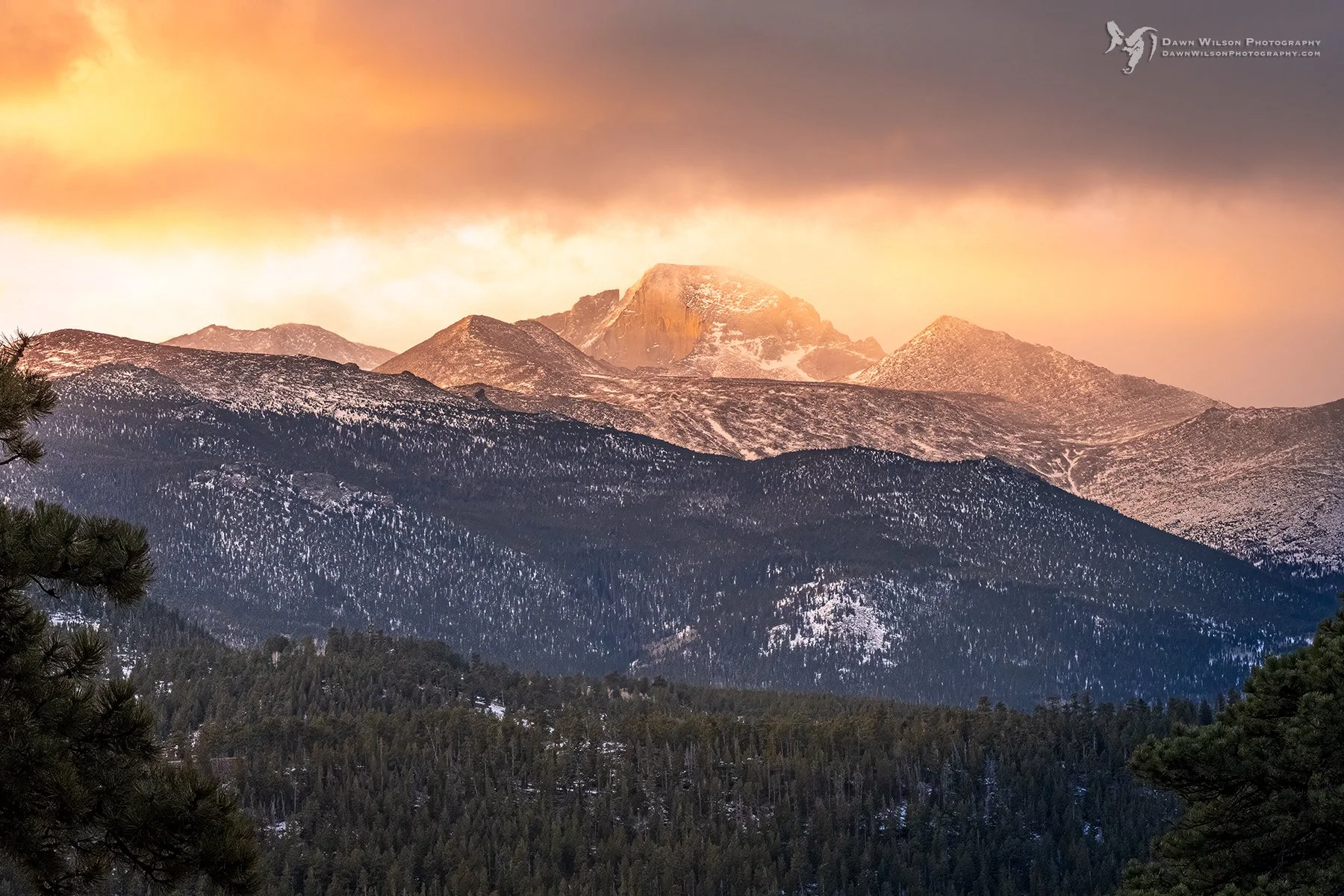
Longs Peak at sunrise in Rocky Mountain National Park, Colorado. Photographed with a Nikon 70-200mm lens at 102mm.
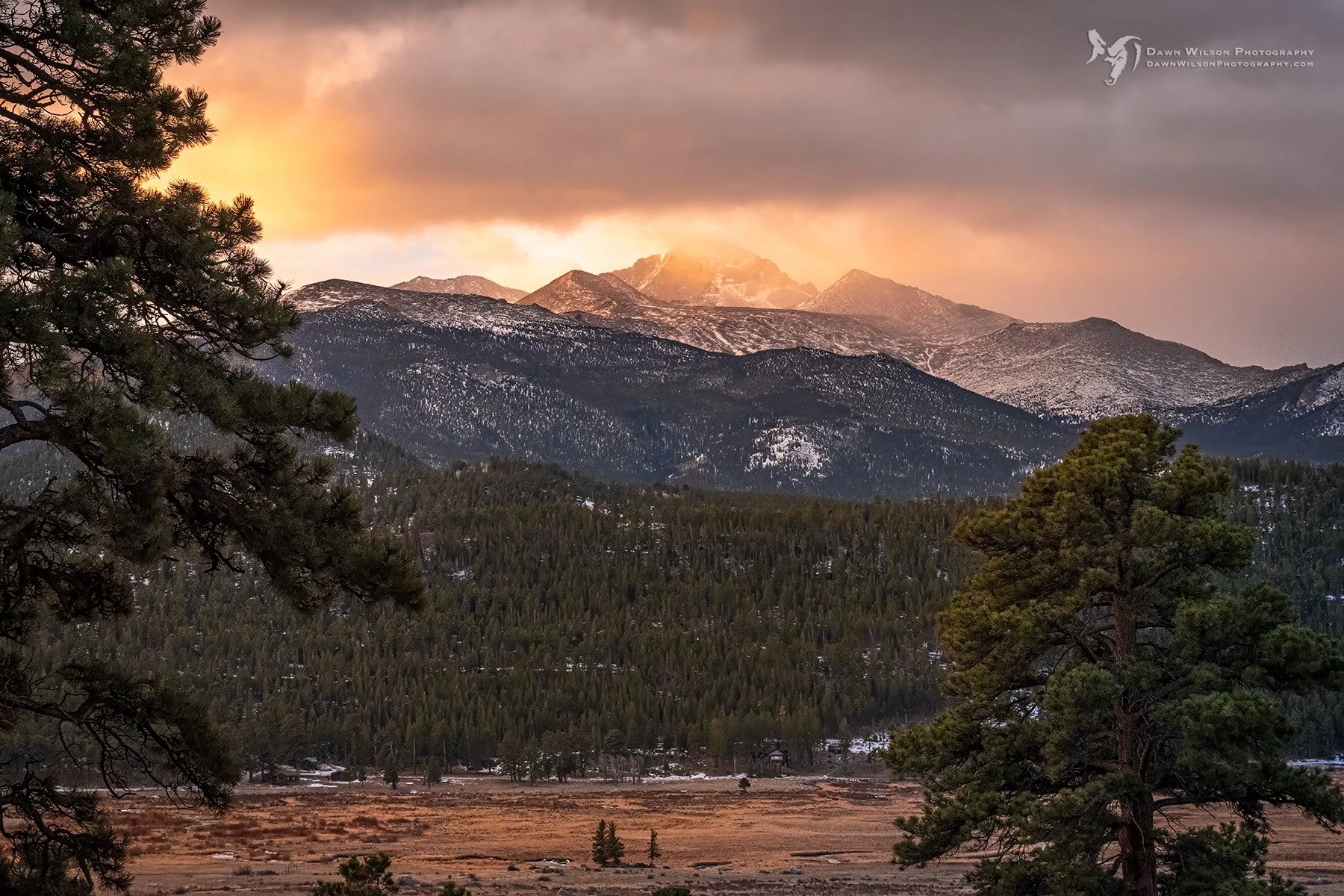
Longs Peak at sunrise in Rocky Mountain National Park, Colorado. Photographed with a Nikon 24-70mm lens at 70mm.
Each image has a different feel and a different perspective on this massive park and its iconic 14,259-foot mountain, Longs Peak.
For prints, these make a nice collage of a memorable morning as well.
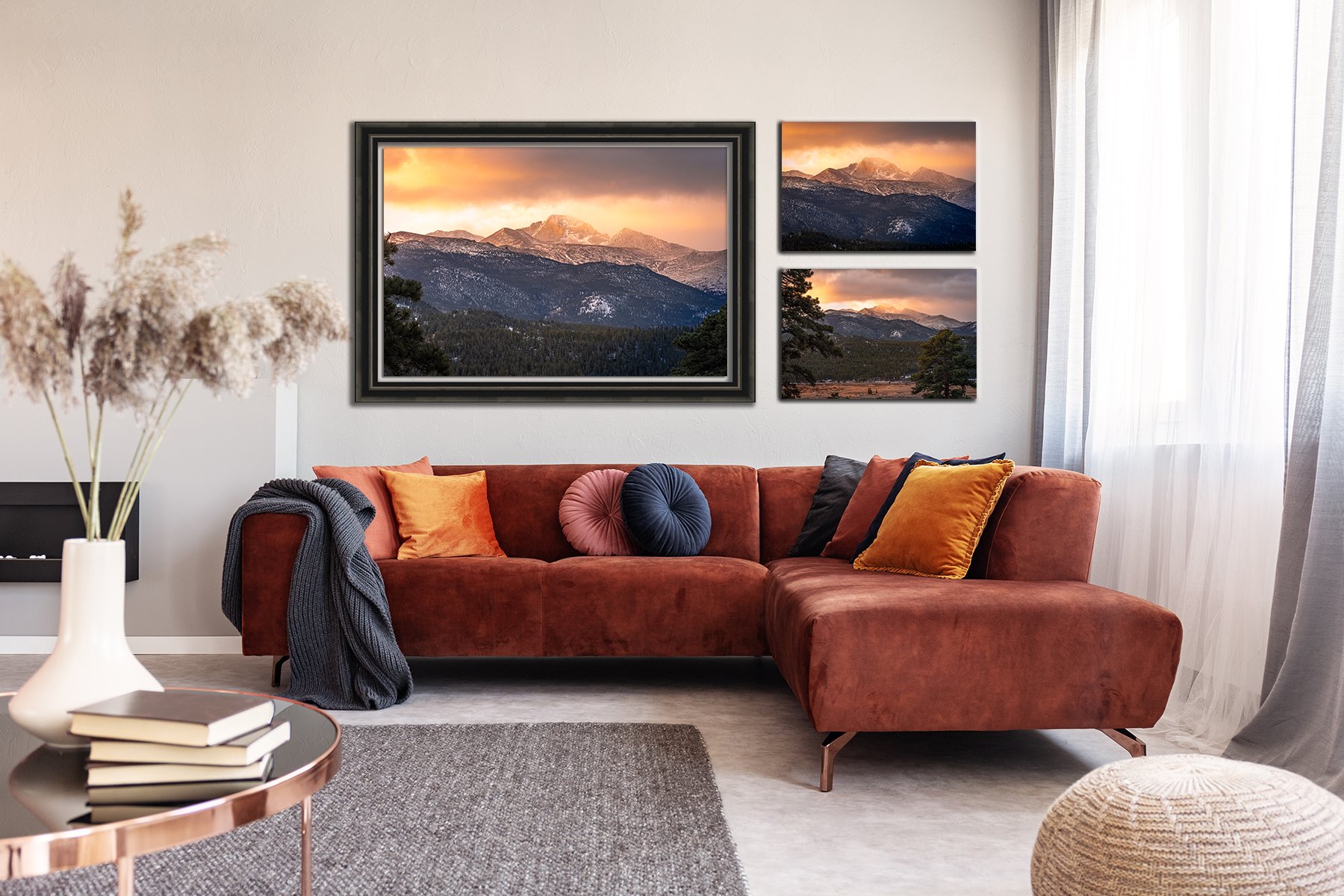
A room display to show how three images of the same scene in Rocky Mountain National Park can create an appealing collage on a wall.
To learn more about photographing landscapes, book a photo tour with Dawn Wilson through her tour company, Creeks and Critters Nature Tours. To order prints of any of these images, visit her fine art photography website.