
Elk Babies Are On the Way
The weather in Estes Park, Colo. has been a bit like whiplash the last couple of weeks, with two feet of snow followed by 70-degree weather followed by another foot of snow and rain. But even that kind of spring weather pendulum doesn't stop the cow elk from prepping for the pending birth of her little newborn.
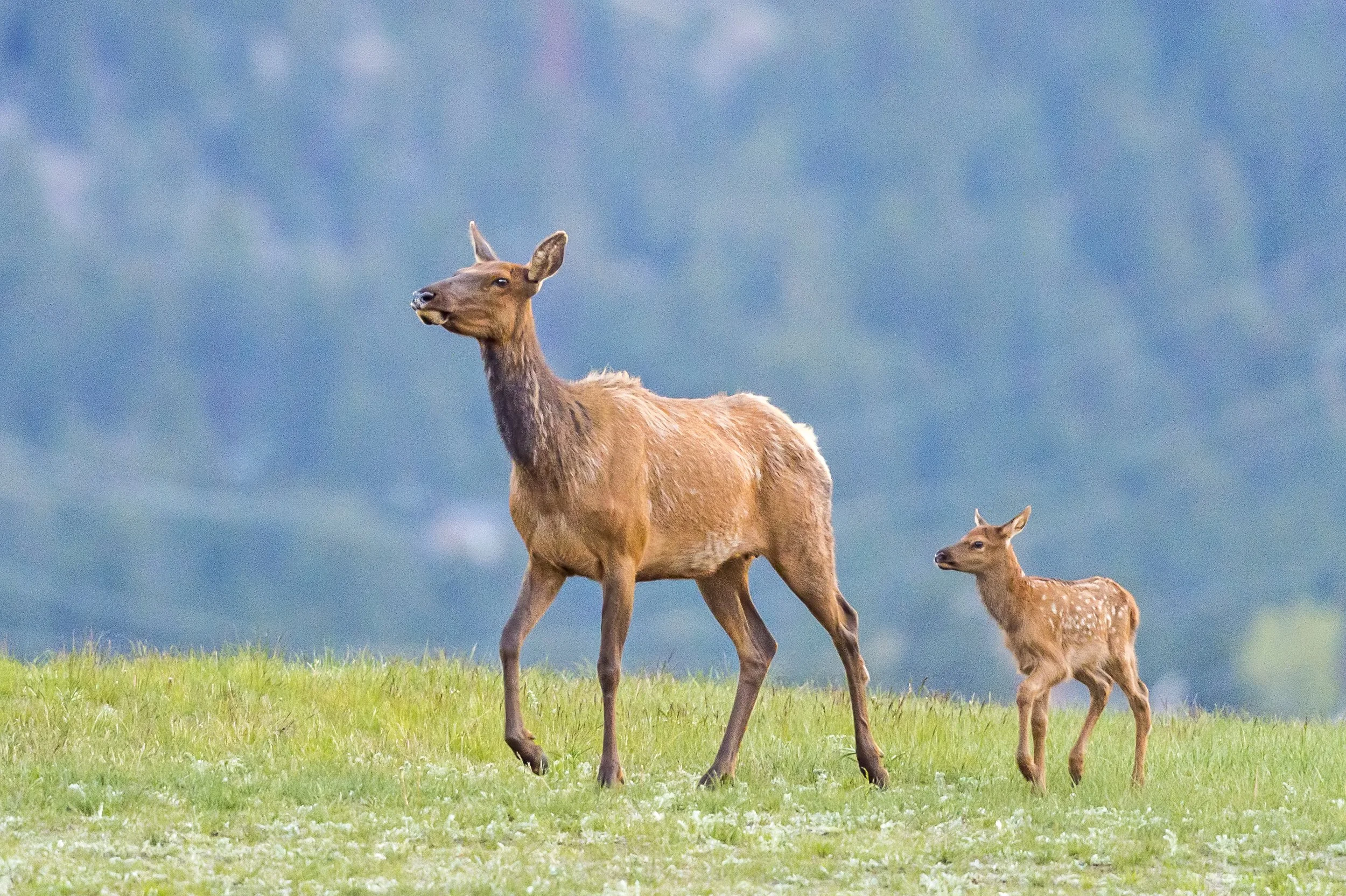
A newborn elk calf follows closely behind mom in Estes Park, Colorado.
As the forbs begin to grow and the valley turns green, the cows enter their last weeks of gestation. It is no coincidence that elk give birth in late May. It is when the vegetation begins to reach its peak nutritional value, perfect for a mother elk producing milk for her calf.
The telltale signs are there of the upcoming births. The elk have shed most of their winter hair, revealing a sleek coat of golden brown. This shedding process signifies the first change in cow elk during May — the change in hormone levels — that also triggers calving.
Cow elk live most of their lives in a large herd of elk comprised of calves, yearlings and other cow elk. The cows will, however, separate from the herd to find a quiet spot for giving birth. After the birth, the cow stays with her newborn for a few days before rejoining the herd. That separation process has also started around Estes Valley as noticed by the individual cows — with large, round bellies — mulling about in neighborhoods and in thick vegetation.
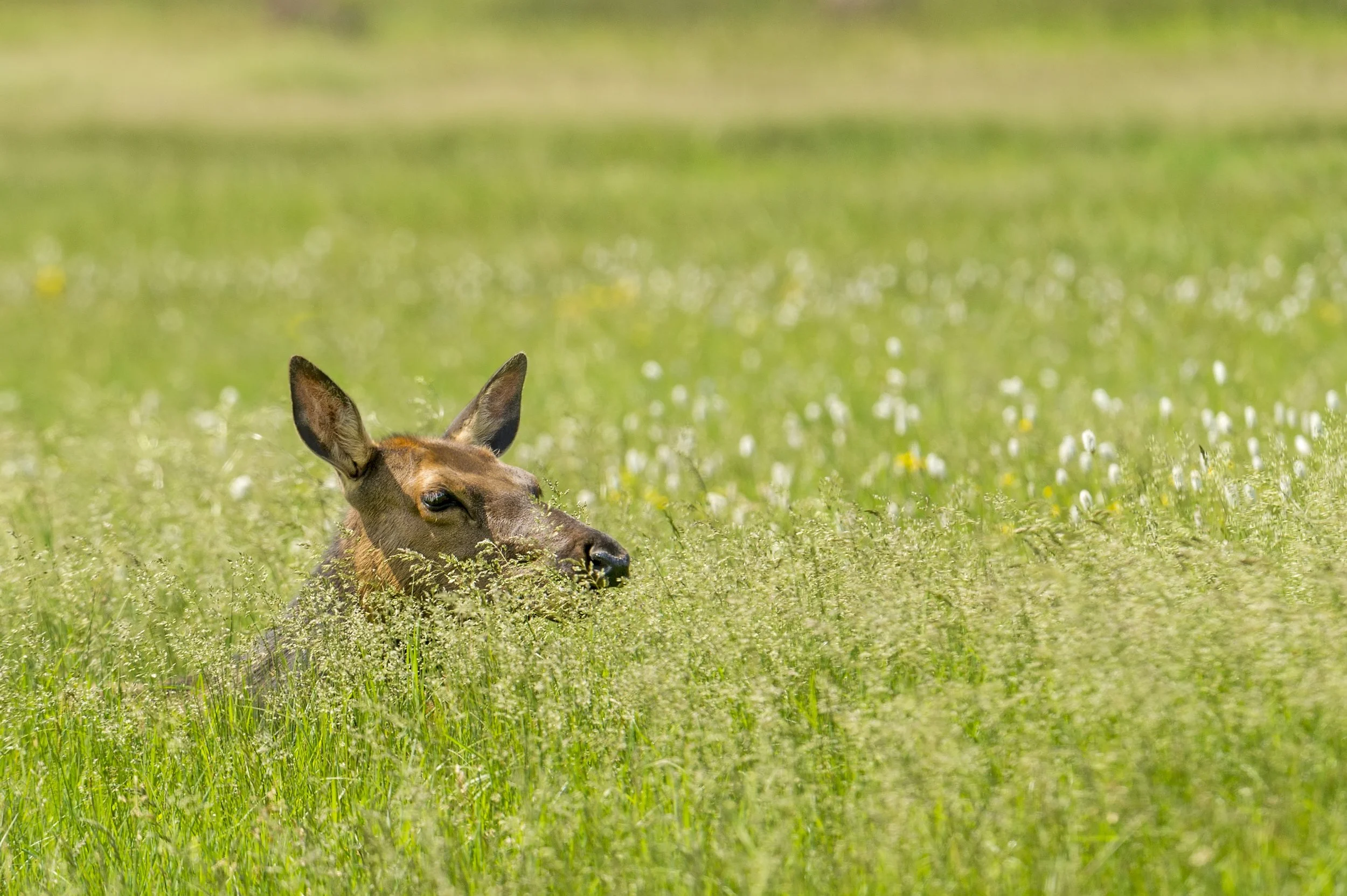
A cow elk burrows down into the tall grasses to stay cool and comfortable in Rocky Mountain National Park, Colorado.
As with human moms, the last stages of pregnancy for cow elk are extremely uncomfortable. The body produces a lot of heat as the baby grows inside the womb. The weight strains the back and internal organs. Walking becomes awkward. As a result, the cows will spend much of their time lounging in cool grass, chewing their cud and reducing strain and energy use.
The final signs include the vulva turning noticeably enlarged and red, and the shape of the cow's belly becomes more "dropped" looking as the calf shifts into birthing position. This latter change happens about 24 hours before birth.
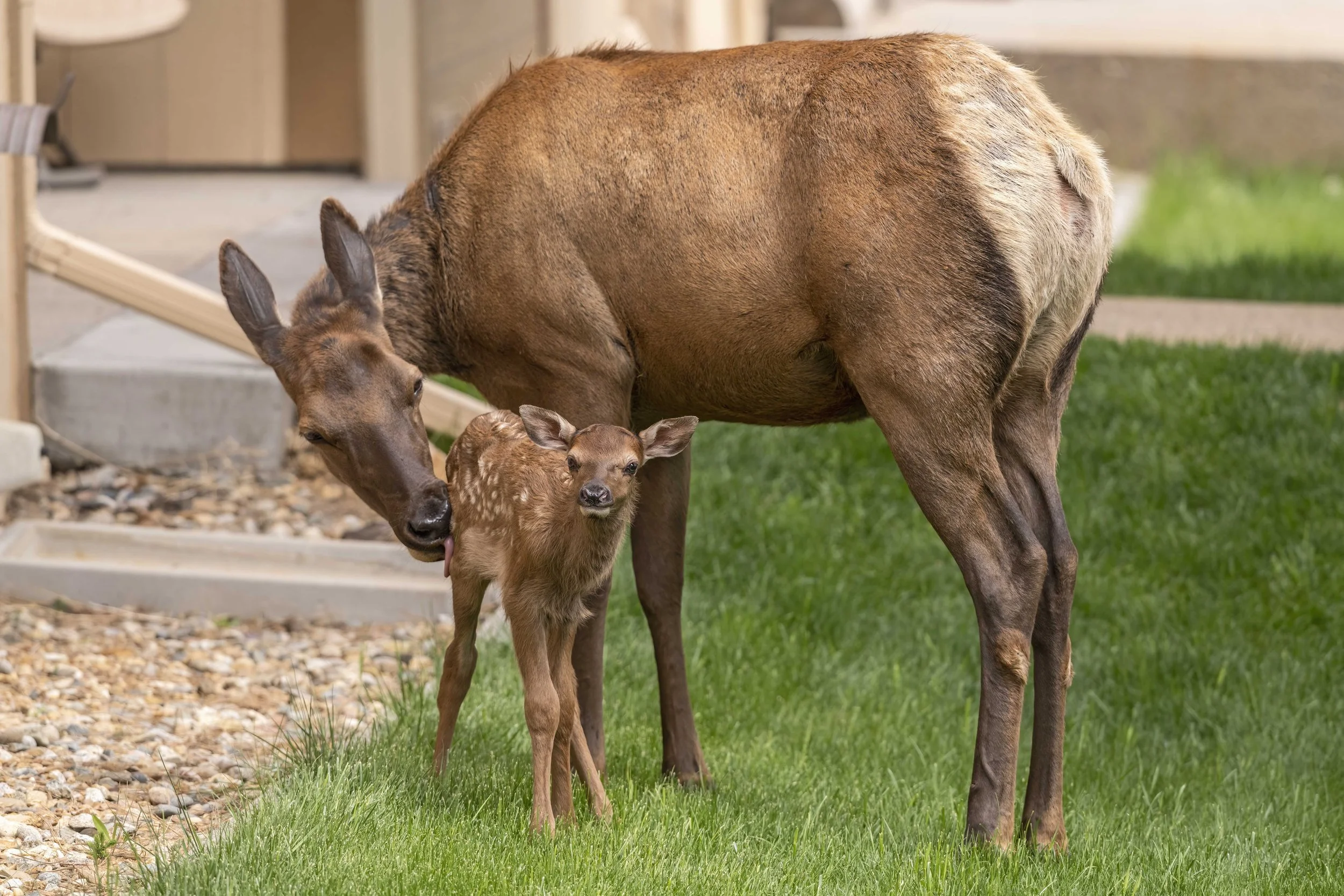
An hours-old elk calf gets a nuzzle from its mother in Estes Park, Colorado.
And then the calf arrives. A wobbly bundle of white spots and big ears, the elk calf can weigh 30 to 40 pounds at birth and starts packing on 1 to 1.5 pounds per day.
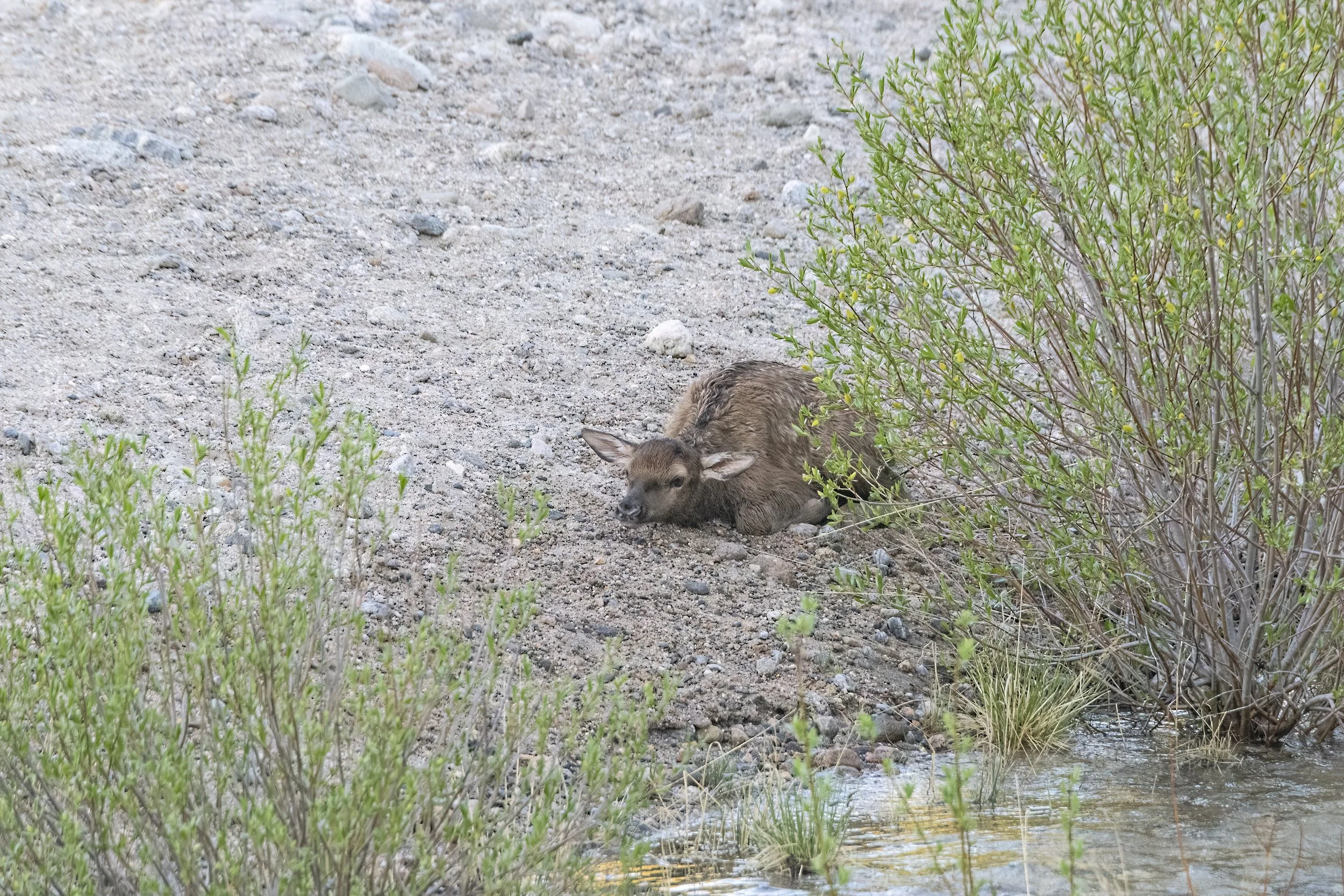
A newborn elk calf is tucked away in a riverside willow plant to stay safe while mom goes off to feed in Rocky Mountain National Park, Colorado.
As cute as the calf will be, watch out for mom; she is no longer so cute. She becomes very protective — some cows more than others — of her new little one. And in those first few weeks of life, the calf can be hidden in any corner, bush, garden or other area where mom can stay nearby to keep a watchful eye on her little one as it learns to stay hidden from sight.
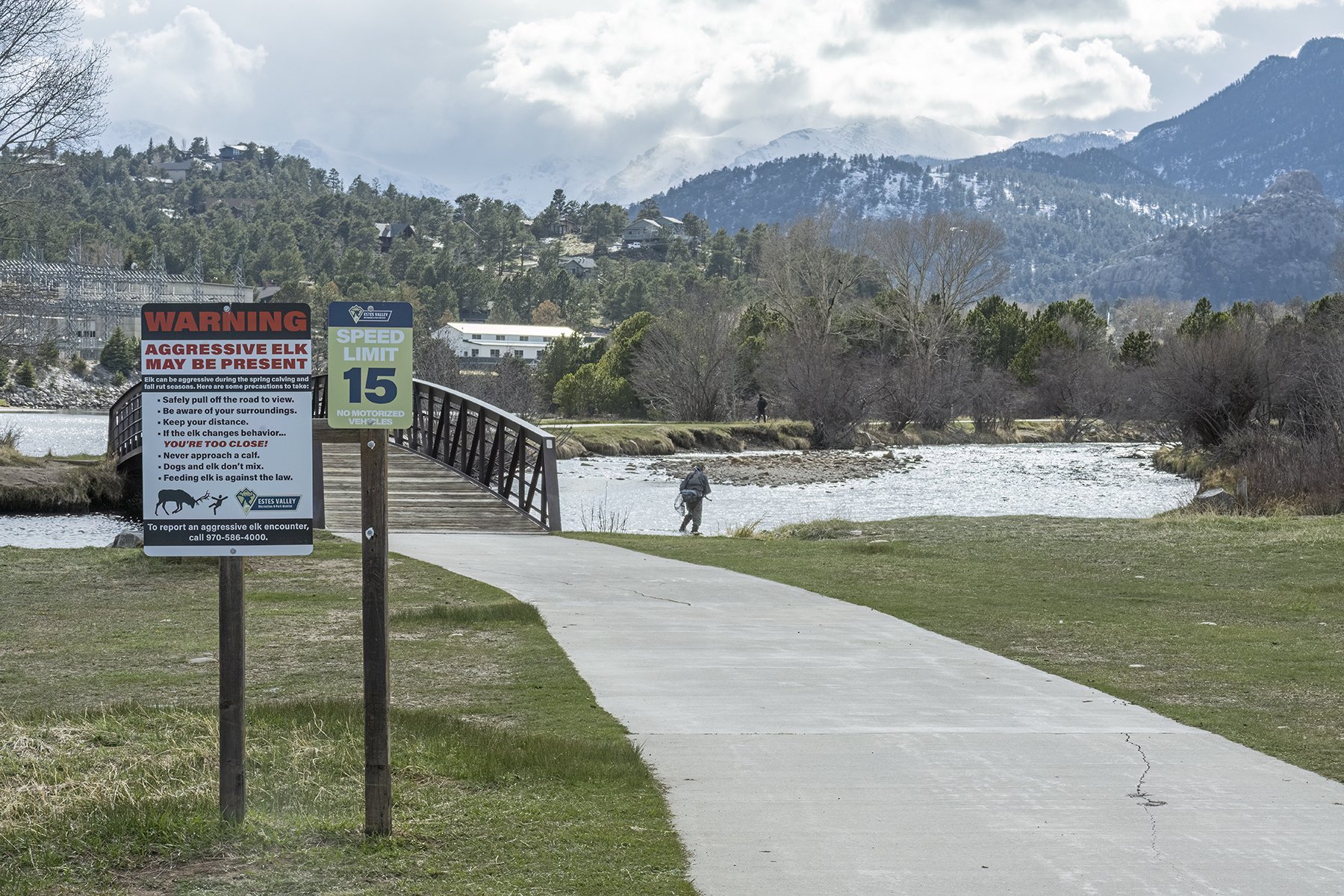
A sign along the Lake Estes Trail warns trail users of the dangers of elk in the area during calving season. Estes Park, Colorado
If you see a cow by herself, chances are better than not that a calf is nearby. Give mom a wide range and watch out for any signs that she may be ready to pounce on you for looking her way or getting too close to the unseen calf. The cow may pin her ears, glare directly at you, curl a lip or paw the ground. You may also notice raised hackles or unusual head movements.
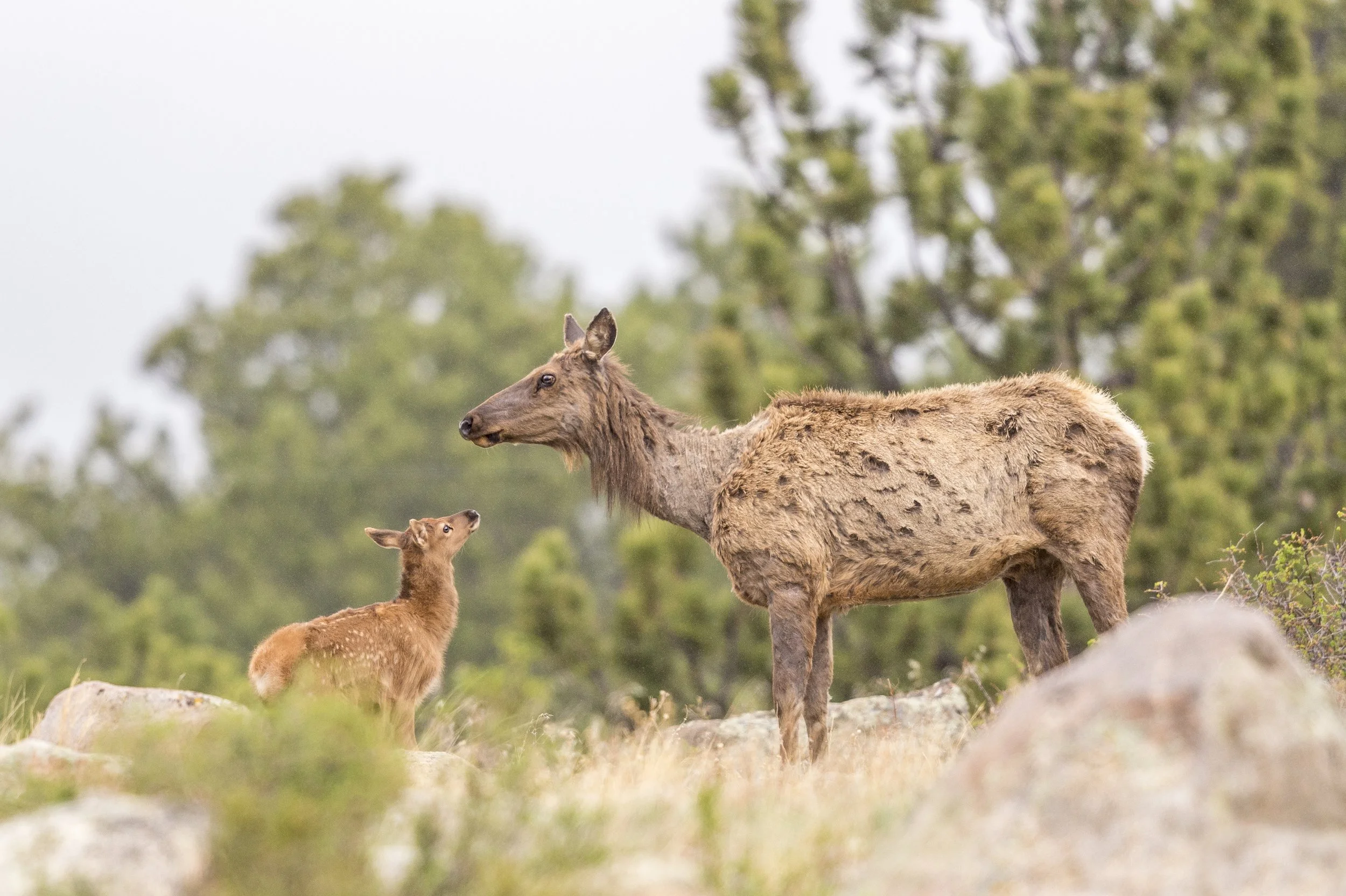
A newborn elk calf in Rocky Mountain National Park, Colorado, looks up to its mom for guidance.
Enjoy calving season, because, just like human babies, elk calves grow very fast. For more information about elk in Colorado, visit Colorado Parks and Wildlife.