
That's a wrap for the 2026 Grand Teton National Park photo tour.
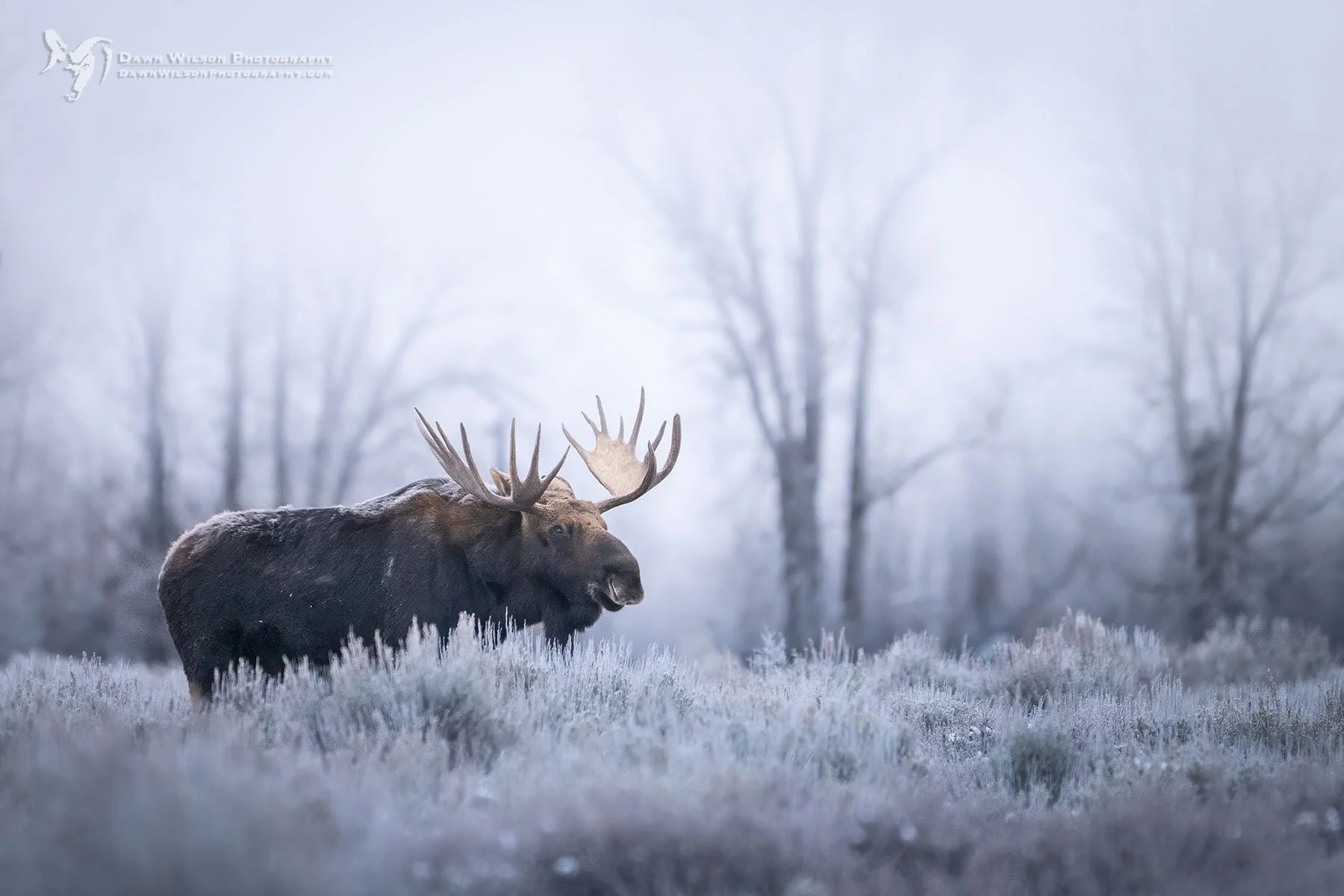
A bull moose on a frosty morning in Grand Teton National Park.
As with most tours through my company, Creeks and Critters Nature Tours, I took a small group into the field to enjoy this stunning park. With peaks that rise 7,000 feet straight out of the valley floor and a wide variety of wildlife, we had a great week of photography.
I timed this trip to catch the bull moose before they shed their antlers and to catch the first snow of the winter season. Both were timed perfectly, as Jackson Hole had the first significant snowfall the day the group arrived and the first set of moose antlers dropped the day the group headed home. It is also a wonderful time in the park because it is a shoulder season, falling after the autumn rush and before ski season starts in late December. This is also typically the timing for the first elk to migrate out of the national forest and into their winter range in the valley, and this group experienced that with three different groups of elk. One group had more than 500 animals migrating through the Gros Ventre River bottom.
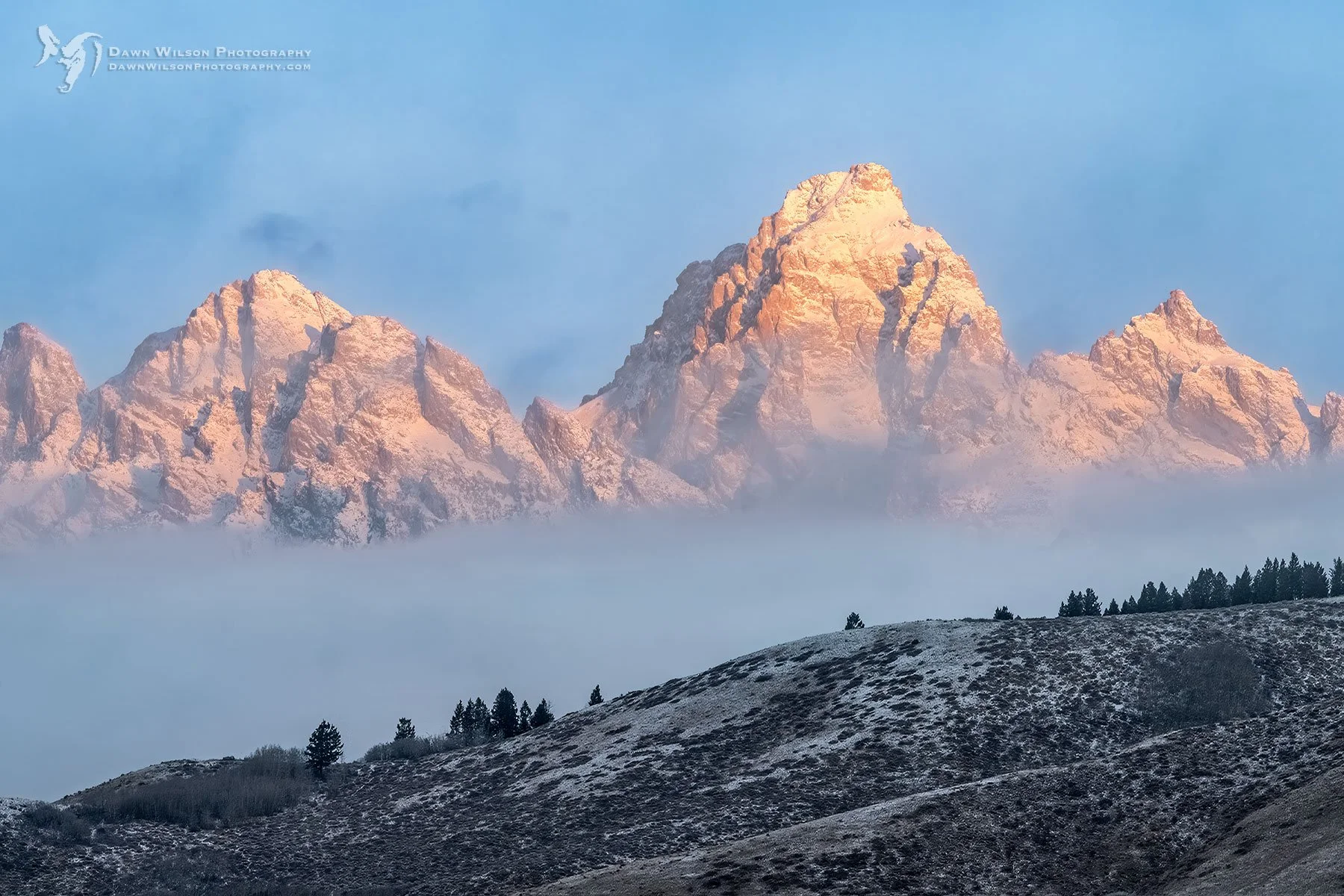
The beautiful morning light hits the peaks of the Teton Range in Grand Teton National Park.
This combination has a very small window, as the first snow seems to arrive later and later each year. This year offered ideal weather with fog, frost, a morning for sunrise and an afternoon for sunset, and other days full of soft clouds, ideal for photographing wildlife all day long.
On our first day, we counted 44 moose. Not all were within photography distance, but that number broke my own record for most moose seen in a day.
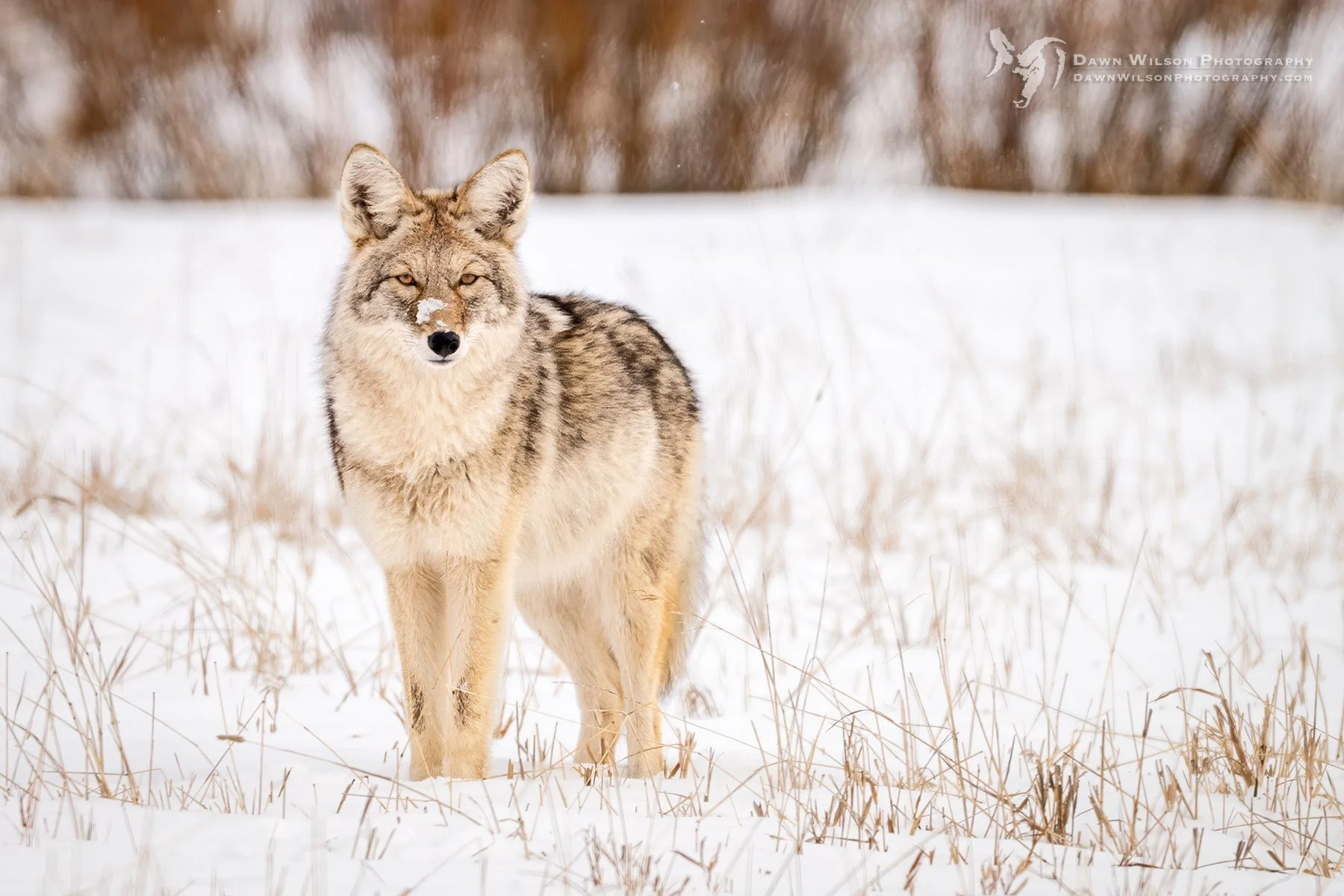
A healthy coyote stands in a snowy field in Grand Teton National Park.
We also spotted red fox, coyotes, muskrats, a skunk (a first for me in the park), elk, mule deer, common ravens, and a baby beaver. Unfortunately, we didn't get photos of the latter because it was after sunset, but it was so fun to see the little cutie. We also saw fresh mountain lion tracks in the snow nearby. Again, no photos of this elusive animal.
In addition to the wildlife, we spent a lot of time photographing the unique landscapes as the weather changed. Fog developed on numerous mornings, frost coated the willows and sage bushes a couple of mornings, snow blanketed the landscape a couple more mornings, and the patterns in the willows, forests, and aspens created unique perspectives of this frequently photographed destination.
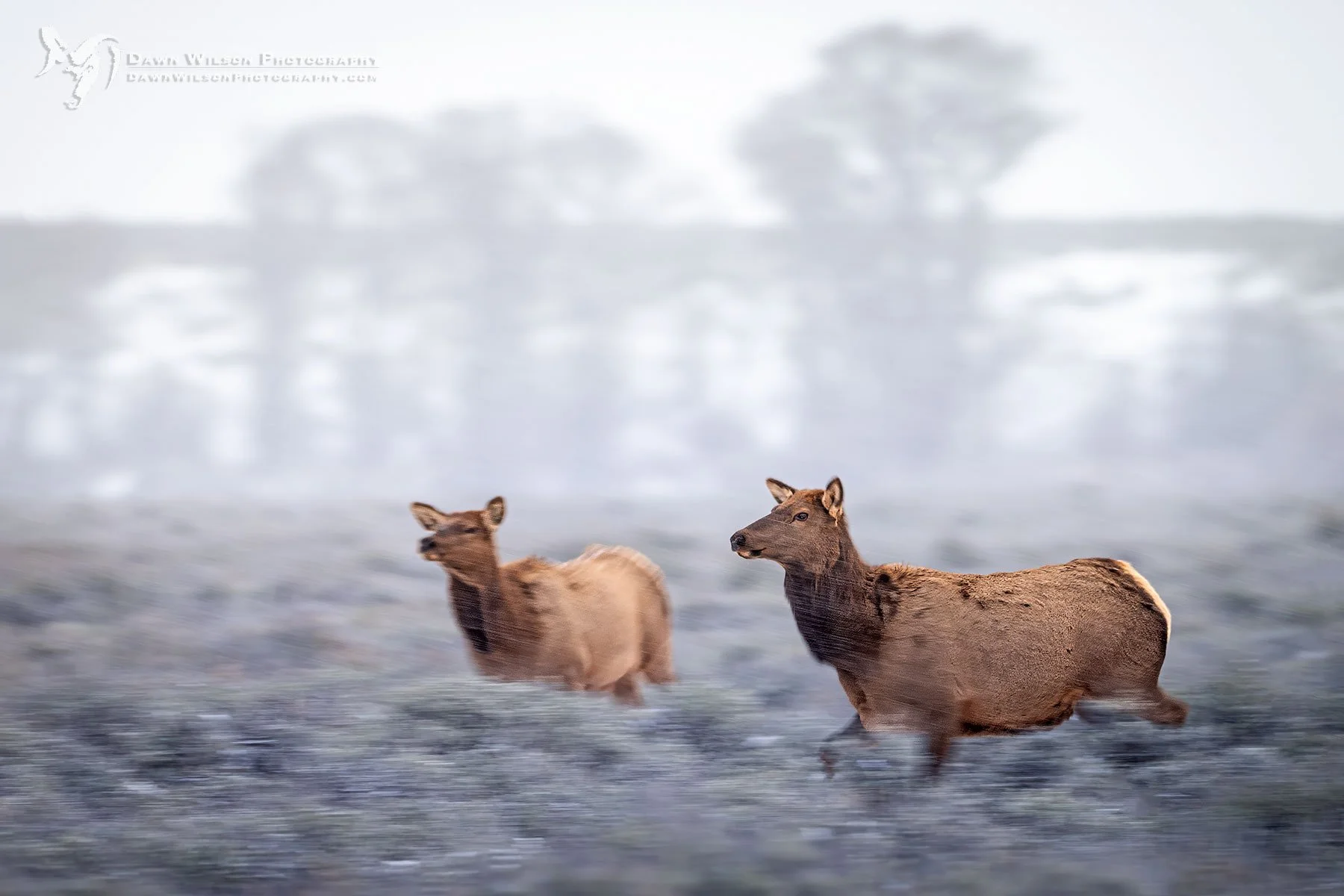
A panning shot of elk moving through the sagebrush on their migration into the valley of Grand Teton National Park.
The weather offered only a few opportunities for sunset or sunrise but we made the best of them, capturing sunrise on two mornings. The second morning was unexpected as we headed out to photograph moose in fog and instead went far enough away from the valley floor to get beyond the fog and see the peaks of the Teton Range rise above the dense cover.
I encourage creativity when visiting a frequently photographed place. One of those techniques is to use a long lens to focus on the detail of the Grand Teton at sunset as the clouds and fog swirled around this 13,770-foot peak.
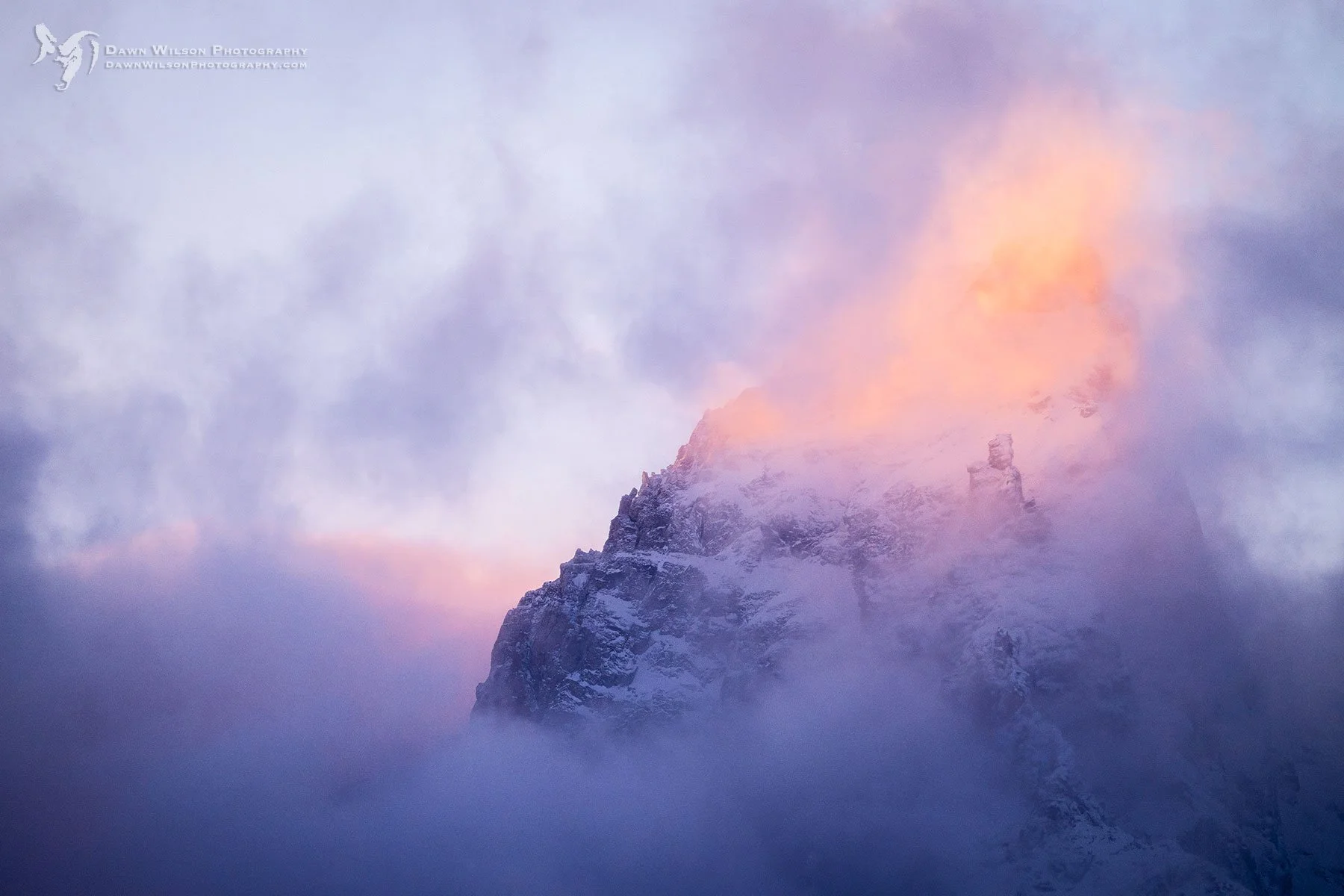
A long-lens perspective of sunset on the Grand Teton on a fall afternoon in Grand Teton National Park, Wyoming.
I have another tour already scheduled for 2027. If these photo opportunities sound appealing to you, join me for another small tour group into Grand Teton National Park for wildlife and landscapes next year.
Next up, I head to southern New Mexico for two back-to-back tours to photograph birds in the beautiful Southwest light and color.
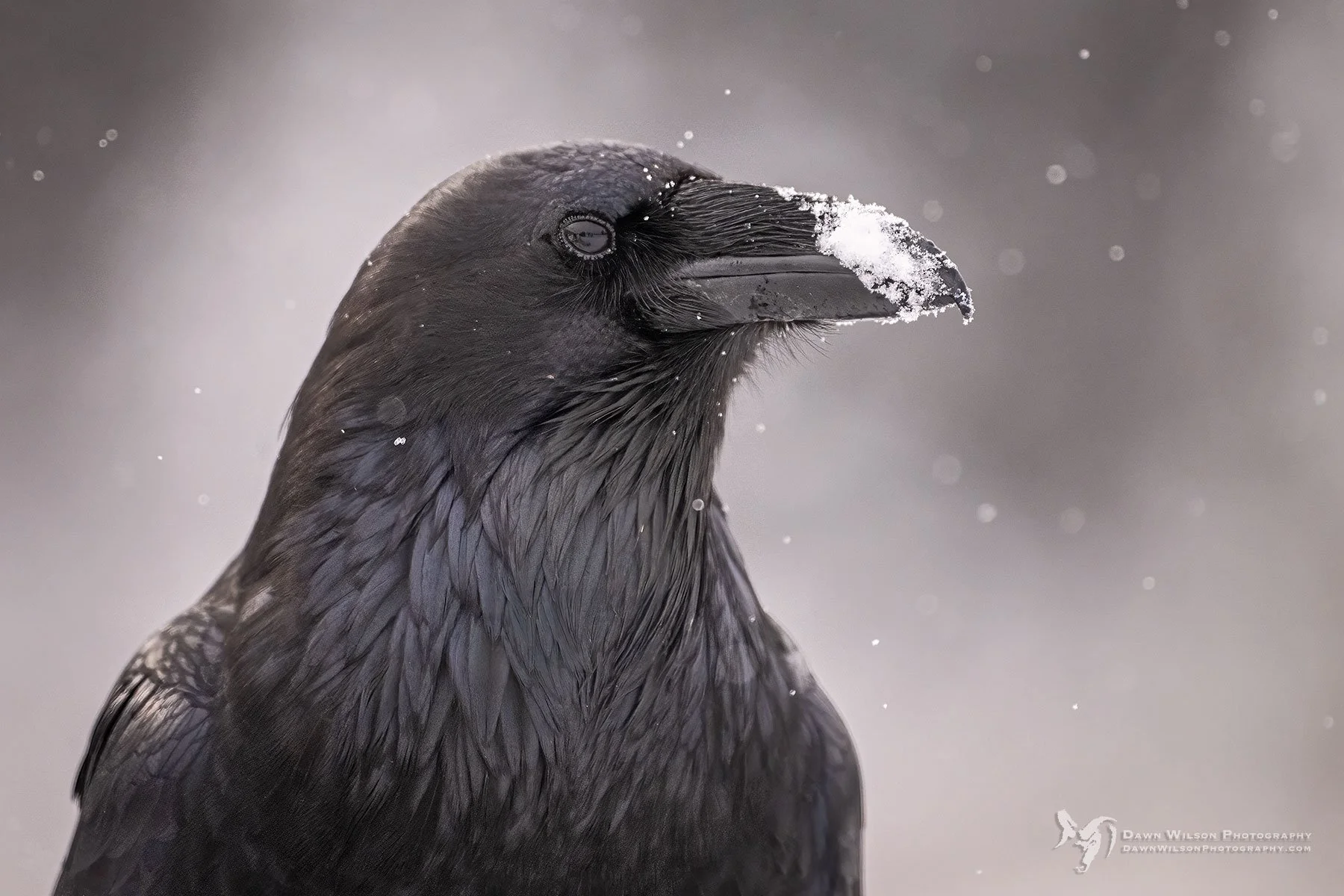
A portrait of a common raven in falling snow in Grand Teton National Park, Wyoming.